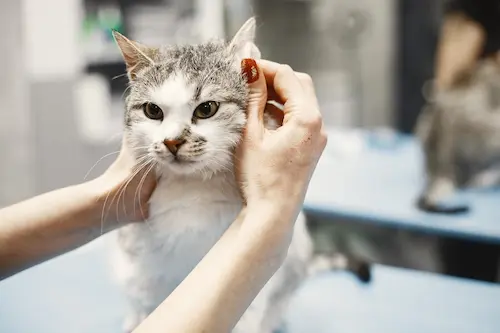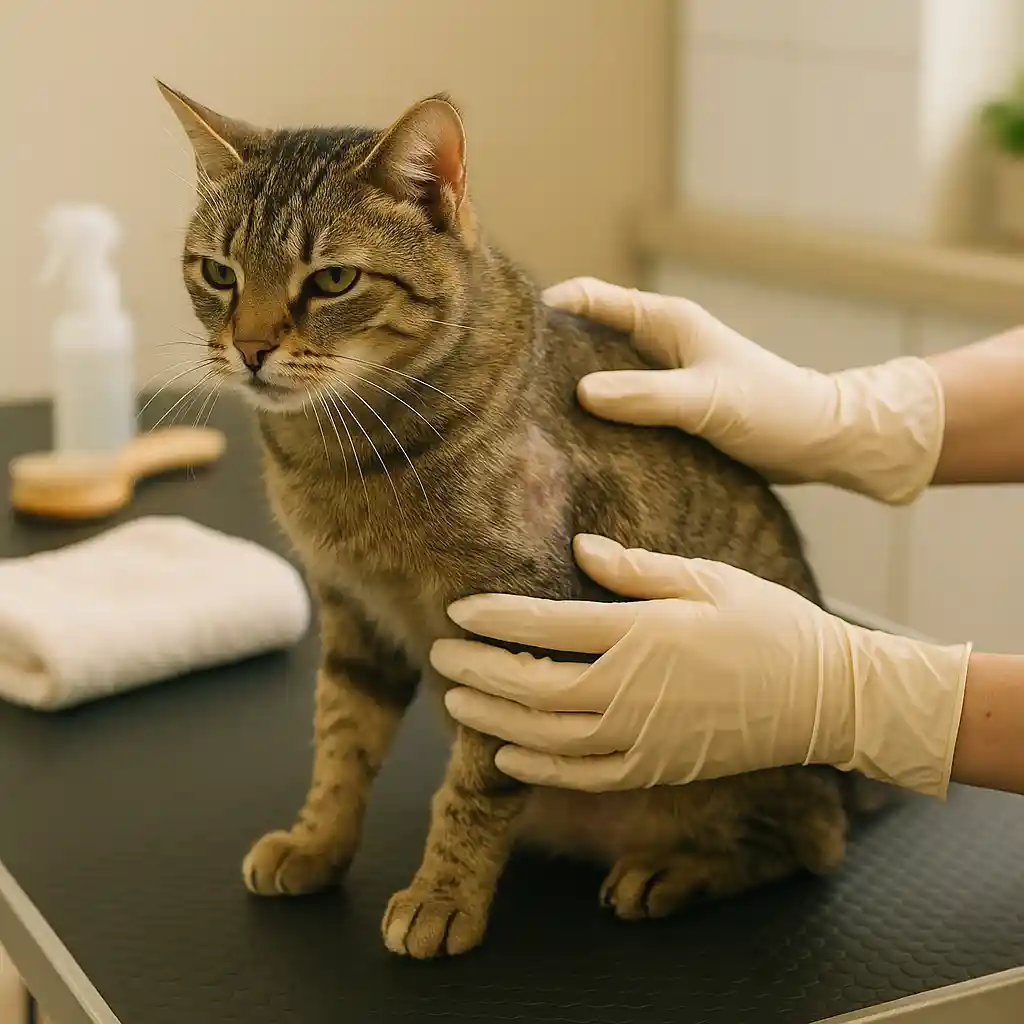





Mange in cats is a skin condition caused by microscopic mites that irritate the skin, leading to itching, hair loss, and scabs.
When people hear the word mange, they usually think of dogs, but cats can also suffer from this itchy and uncomfortable skin condition. Although mange isn’t very common in cats, it’s something to consider if other causes of skin problems, such as fleas or allergies, have been ruled out. Pet Grooming in Abu Dhabi can also help in the early detection of such skin issues and keep your cat’s coat healthy. While mange is rarely life-threatening, it can cause serious discomfort, so getting proper treatment is important.
If your cat seems weak, tired, or stops eating, contact a veterinarian immediately; these may be signs of a more serious health issue.
Types of Mange in Cats
The following are the main types of mange that can affect cats. A different kind of mite causes each and can appear in slightly different ways:
1. Demodectic Mange (Demodicosis)
- Caused by Demodex cati and Demodex gatoi mites.
- Leads to hair loss, itching, and scaly skin, especially in cats with weak immunity.
2. Sarcoptic Mange (Canine Scabies)
- Sarcoptic mange in cats is caused by Sarcoptes mites, usually spread from infected dogs.
- It leads to sores, hair loss, and intense itching.
3. Notoedric Mange (Feline Scabies)
- Caused by Notoedres cati mites; very contagious among cats.
- Affects the face and ears, leading to crusty skin and severe itching.
4. Otodectic Mange (Ear Mites)
- Caused by Otodectes cynotis mites living inside the ear canal.
- Leads to ear irritation, head shaking, and possible ear infections.
5. Walking Dandruff (Cheyletiellosis)
- Caused by Cheyletiella blakei mites, visible as white flakes on the fur.
- Results in dry, flaky skin and constant itching.
6. Trombiculosis (Harvest Mites or Chiggers)
- Caused by Neotrombicula autumnalis mites found outdoors.
- Small red or orange dots appear on the skin, causing irritation and itching.
Each type of mange affects cats differently, so identifying the specific cause is the first step toward proper treatment and relief.
Common Signs of Mange in Cats
Mange mites irritate the skin, making your cat extremely uncomfortable. Watch out for these signs:
- Constant itching, scratching, and visible skin irritation.
- Noticeable hair loss or bald patches on different body areas.
- Red, crusty, or inflamed skin with rashes and small sores.
- White flakes or moving dandruff on the fur and skin surface.
- Crusty skin around the ears or belly hair pulling due to discomfort.
Keep in mind that these symptoms are not unique to mange. Allergies, fleas, fungal infections, or ringworm can cause similar skin problems. Regular Cat Grooming in Abu Dhabi can help detect such issues early and maintain your cat’s coat health.
What Causes Mange in Cats?
Mange in cats usually starts when mites spread from one animal to another or from contaminated surroundings. Here’s how it commonly happens:
- Mange often spreads when a healthy cat comes into contact with an infected cat.
- Mites can survive briefly on bedding, brushes, or furniture and infect other cats.
- Not all mange types are contagious. D. cati mites usually live harmlessly on the skin.
- These mites become a problem when a cat’s immune system is weak or stressed.
- Kittens, stray cats, and shelter cats are more prone due to close contact and low immunity.
Home Remedies for Mange in Cats
If your cat has mild mange, a few natural home remedies may help soothe the skin and support healing.
1. Apple Cider Vinegar Solution
- Combine equal amounts of apple cider vinegar and water in a clean container.
- Gently apply it to affected areas using a soft cloth.
- Helps eliminate mites and reduce itching naturally.
2. Plain Organic Yogurt
- Apply a small amount of plain, unsweetened yogurt to dry or scabbed areas.
- The probiotics help restore skin balance and reduce irritation.
3. Soothing Anti-Itch Cream
- Use mild cortisone or vet-approved anti-itch creams.
- Reduces redness, swelling, and constant scratching.
4. Natural Honey Treatment
- Dab a thin layer of raw honey on irritated spots.
- Acts as a natural antiseptic, moisturizing and calming the skin.
5. Mite-Repellent Spray
- Use gentle, pet-safe sprays from a pet store made for mites.
- Keeps the infestation under control and prevents re-infection.
6. CBD Oil for Skin Relief
- A few drops of pet-safe CBD oil can calm irritation and promote healing.
- It also helps reduce stress, which supports a stronger immune system.
Tip: Always test any home remedy on a small patch first to ensure your cat doesn’t react negatively, and never use harsh products meant for humans.
Conclusion
Mange in cats can be uncomfortable and distressing, but with early detection and the right care, your furry friend can recover quickly. Understanding the types, causes, and symptoms helps you act fast and choose the best treatment, whether through vet care or gentle home remedies. For long-term coat health and prevention of skin issues, it’s important to Cure Cat Dandruff for a Shiny, Healthy Fur.
FAQs
Is mange in cats contagious to other cats?
Some types are, like notoedric and sarcoptic mange, others like demodectic mange rarely spread between cats.
Can humans catch mange from a cat?
Certain types, like sarcoptic mange, can cause temporary skin irritation in humans, but it doesn’t establish long-term infection like it does in pets.
How do I know if my cat has mange or just allergies?
Mange usually causes visible mites, crusty patches, and hair loss in specific spots, while allergies tend to cause more widespread itching without crusting, a vet check confirms it.
Can mange in cats go away on its own?
Mild cases sometimes improve with home care, but most cases need proper treatment to fully clear and prevent spreading to other pets.
How long does it take to treat mange in cats?
Most cases improve within 4 to 6 weeks with consistent treatment, though severe cases can take longer depending on the mite type and the cat’s immune response.
Is mange in cats an emergency?
Not usually, but if your cat stops eating, seems weak, or has severely infected skin, that needs immediate vet attention.