

If you’ve ever watched your cat hiss, scratch, or panic the moment a brush comes out, you’re not alone. Many cat parents in Abu Dhabi ask the same question before booking a grooming appointment:
“Should my cat be sedated for grooming, or is there a safer option?”
After working with hundreds of cats, from calm Persians that enjoy a gentle brush to rescue cats that become extremely anxious, we’ve learned one important lesson: sedation should never be the first solution. In most cases, patience, proper handling, and the right grooming approach can achieve the same result without putting unnecessary stress on your cat, exactly what we focus on with every pet grooming Services in Abu Dhabi appointment.
Let’s look at when sedation may be appropriate, when it isn’t, and how you can make the safest decision for your pet.
What Is Sedated Cat Grooming?
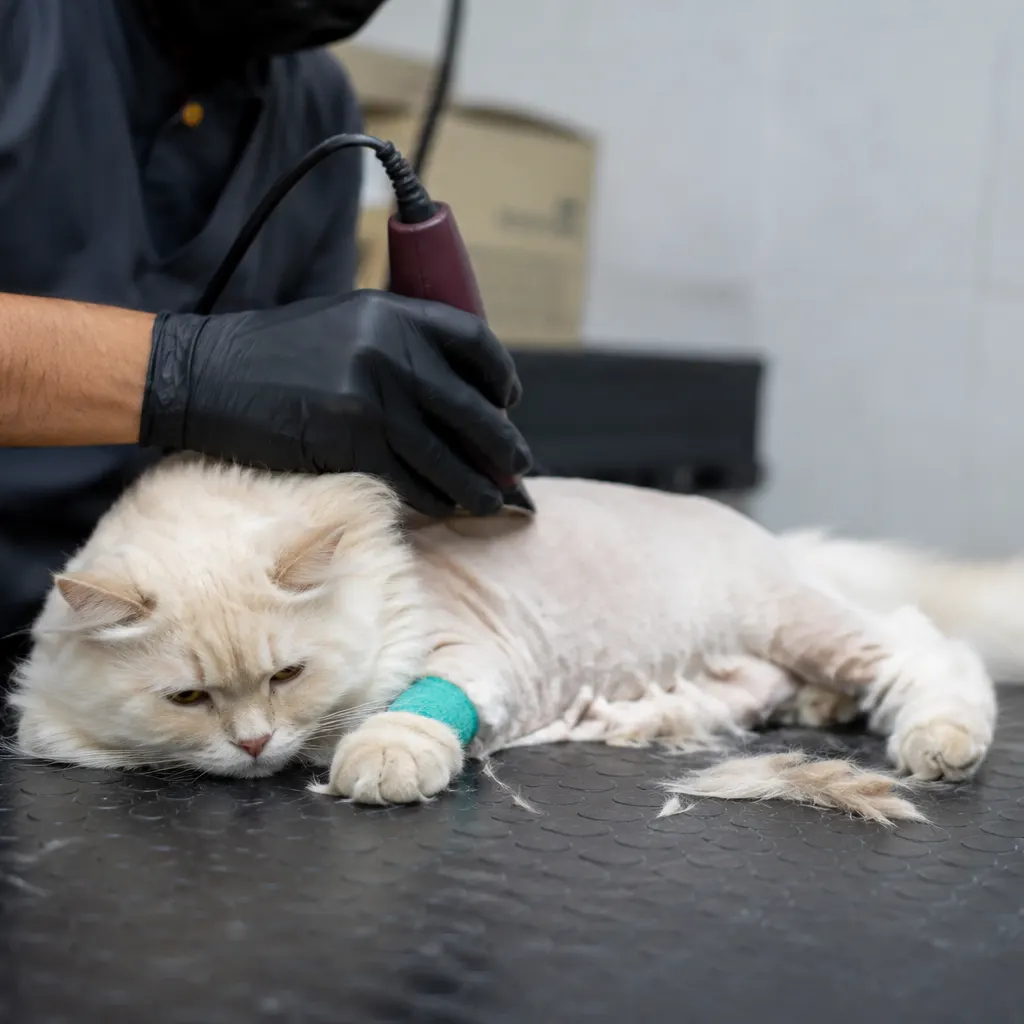
Sedated cat grooming means your cat receives medication that helps them stay calm or sleepy during grooming. Depending on the situation, this may involve mild sedation or stronger medication administered by a licensed veterinarian.
It’s important to understand that groomers should never sedate a cat on their own, that’s not something we do during cat grooming in Abu Dhabi either. If sedation is medically necessary, it should always be recommended and supervised by a veterinarian.
For healthy cats that simply dislike grooming, sedation usually isn’t required.
When Do Cats Actually Need Sedation?
Most cats don’t.
However, a veterinarian may recommend sedation if a cat:
- Has severe matting that causes pain
- Is extremely aggressive because of fear or trauma
- Has a medical condition that makes grooming difficult
- Needs grooming alongside another medical procedure
- Cannot be safely handled despite gentle techniques
These situations are less common than many people think.
Is Sedated Cat Grooming Safe?
It can be safe—but only when there’s a genuine medical reason and a veterinarian is involved.
Sedation always carries some level of risk. Factors such as age, weight, heart health, breathing conditions, and overall medical history all affect how a cat responds.
That’s why responsible pet professionals never recommend sedation simply because a cat is nervous. Many anxious cats become much calmer when they’re handled slowly in a quiet environment by experienced cat groomers.
Why Experienced Groomers Often Avoid Sedation
One cat owner recently booked a grooming appointment after another salon suggested sedation because her British Longhair refused to stay still.
Instead of rushing the process, we spent the first few minutes allowing the cat to explore the grooming area. We used slow movements, quiet handling, and frequent breaks.
The result?
The cat completed the grooming session without sedation.
Experiences like this remind us that what looks like aggression is often fear. When cats feel safer, they usually become much easier to handle.
Questions Every Abu Dhabi Pet Parent Should Ask
Before agreeing to sedated grooming, ask:
- Is sedation medically necessary?
- Has a veterinarian examined my cat?
- What medication will be used?
- How will my cat be monitored?
- Are there safer alternatives?
- What should I expect during recovery?
A trustworthy grooming provider will always explain your options rather than immediately recommending sedation.
Frequently Asked Questions
Can a professional groomer sedate my cat?
No. Sedation should only be administered under veterinary supervision.
Is sedation safe for older cats?
Senior cats may have a higher risk of complications, so a veterinary assessment is especially important.
Can aggressive cats be groomed without sedation?
In many cases, yes. Gentle handling, patience, and experienced grooming techniques can often make sedation unnecessary.
How often should cats be groomed?
It depends on the breed, coat type, and lifestyle. Long-haired cats generally require more frequent grooming than short-haired breeds.