



If you’ve noticed your cat grooming herself almost constantly, it’s natural to wonder whether the behaviour is normal or a sign that something is wrong.
It’s common for cat owners to wonder if their cat is grooming too much. A healthy cat grooms throughout the day, but the behaviour shouldn’t damage the coat or skin. If you start noticing hair loss, redness, or the same spot being licked repeatedly, it’s worth finding out what’s causing the change instead of assuming it’s normal.
Knowing the difference between healthy grooming and overgrooming can help protect your cat’s health. If your cat’s grooming habits change, a Mobile Pet Grooming Abu Dhabi visit can help spot coat and skin issues early.
Is It Normal for Cats to Groom Themselves So Often?
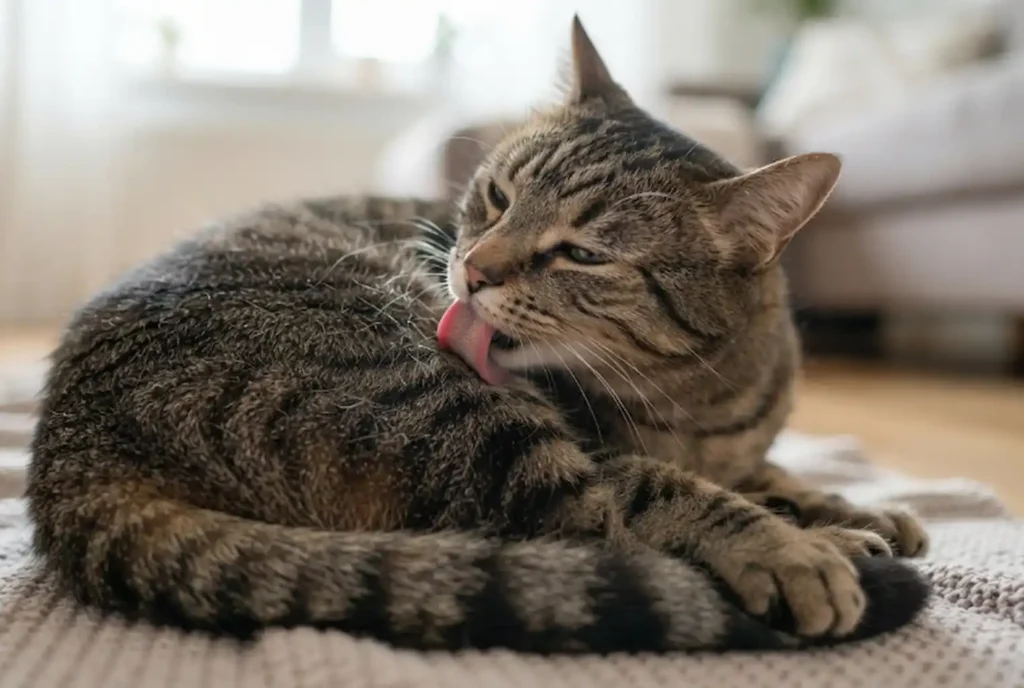
Yes, most healthy cats groom several times throughout the day.
Grooming helps your cat:
- Remove loose fur and dirt
- Spread natural skin oils across the coat
- Reduce parasites
- Stay cool during warm weather
- Relax after eating or stressful situations
A cat that grooms after meals, naps, or playtime is usually showing normal behaviour, but if these habits suddenly change, Cat Grooming Services in Abu Dhabi can help identify early coat and skin concerns.
Signs Your Cat’s Grooming Needs Attention
Many owners tell us the same thing: “She’s always groomed herself, so we didn’t think anything was wrong.”
The difference is that healthy grooming doesn’t damage the coat. When a cat starts licking one area repeatedly, develops bald patches, or leaves the skin red and irritated, there’s usually an underlying reason that needs attention.
- Hair loss or bald patches, especially on the belly, legs, or tail.
- Constant licking of the same area throughout the day.
- Red, irritated, or sore skin after grooming.
Common Reasons Cats Groom Excessively
Fleas and Parasites
Even a single flea bite can cause intense itching, especially in cats with flea allergy dermatitis.
Cats often focus on grooming around:
- Tail base
- Lower back
- Belly
- Inner thighs
Regular parasite prevention is one of the easiest ways to rule out this cause.
Skin Allergies
Cats can develop allergies to:
- Food ingredients
- Dust mites
- Pollen
- Cleaning products
- Certain fabrics
Along with excessive grooming, you may notice redness, ear irritation, or recurrent skin infections.
Stress and Anxiety
Just like humans bite their nails when anxious, cats often groom to comfort themselves.
Common triggers include:
- Moving to a new home
- A new baby
- Another pet
- Loud noises
- Changes in routine
- Being left alone for long periods
Stress-related grooming usually affects the belly, legs, or inside the thighs.
Pain or Discomfort
Cats sometimes lick the area where they feel pain.
For example:
- Arthritis
- Joint pain
- Bladder problems
- Muscle injuries
The grooming isn’t causing the pain—it’s your cat’s way of responding to it.
Skin Infections
Bacterial or fungal infections can make the skin itchy and uncomfortable.
You may notice:
- Scabs
- Flaky skin
- Bad odour
- Hair loss
- Constant licking
These conditions require veterinary treatment.
Dry Skin
Low humidity, dehydration, poor nutrition, or frequent bathing may dry your cat’s skin.
Adding omega-3 fatty acids and ensuring proper hydration often helps improve skin health.
When Should You Be Concerned?
Book a veterinary appointment if your cat:
- Develops bald patches
- Bleeds from excessive licking
- Stops eating
- Seems uncomfortable
- Shows swelling or skin infection
- Continues grooming for long periods every day
Early diagnosis usually makes treatment easier.
How Vets Find the Cause
Your veterinarian may recommend:
- Physical examination
- Flea check
- Skin scraping
- Allergy testing
- Fungal culture
- Blood tests
- Diet trial if food allergies are suspected
Finding the underlying cause is far more effective than simply trying to stop the grooming.
Can Professional Grooming Help?
Professional grooming won’t cure medical problems, but it can support healthy skin and coat care.
A professional groomer can:
- Remove loose undercoat
- Reduce matting
- Identify skin problems early
- Recommend when veterinary care is needed
Cats with long coats often benefit from regular grooming sessions to reduce hairballs and prevent painful mats.
Frequently Asked Questions
How much grooming is normal for a cat?
Healthy cats may spend 30–50% of their waking hours grooming without it being abnormal.
Why is my cat licking one spot repeatedly?
Persistent licking in one area may indicate pain, allergies, parasites, or a skin condition and should be evaluated by a veterinarian.
Can anxiety cause excessive grooming?
Yes. Stress is one of the most common behavioural causes of overgrooming, especially in indoor cats.
Should I stop my cat from grooming?
No. Normal grooming is healthy. The goal is to identify and treat the underlying cause if grooming becomes excessive.
Final Thoughts
A cat that grooms herself regularly is simply following her natural instincts. However, when grooming becomes excessive or damages the skin and coat, it should never be ignored. If you’re wondering, is sedated cat grooming safe, always speak to your veterinarian first.
Watch for changes in your cat’s grooming, especially hair loss or irritated skin. Early veterinary care can identify the cause and help your cat return to healthy grooming habits.