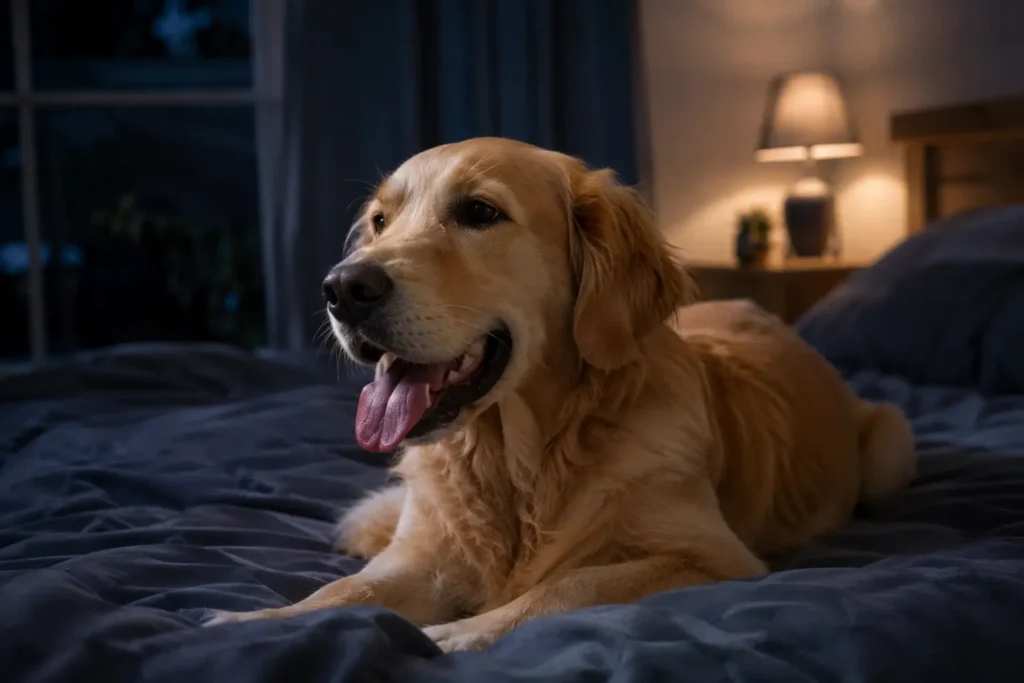

It can be worrying when your dog suddenly starts pacing around the house and breathing heavily at night, especially when everything else seems quiet and normal.
As a pet groomer, I have seen owners become concerned about this because a dog that is usually calm at bedtime may suddenly start panting, looking restless, or changing sleeping spots. In Abu Dhabi, where dogs can be exposed to high temperatures during the day, proper Dog Grooming in Abu Dhabi can also help them stay more comfortable, particularly breeds with thick or heavy coats. But nighttime panting is not always related to heat.
Panting is one of the main ways dogs regulate their body temperature, but it can also tell you something about how they are feeling physically or emotionally. The important thing is to understand what is normal for your dog and notice when their breathing pattern suddenly changes.
Why Do Dogs Pant?
Dogs do not cool themselves in the same way people do. They have a limited number of sweat glands, mainly around their paw pads, so panting plays a major role in releasing excess heat.
A healthy dog may pant after playing, exercising, spending time outdoors, or getting excited. It should normally settle once the dog has rested and cooled down.
However, if your dog is lying quietly and still breathing rapidly, there may be another reason behind it.
What Does It Mean When a Dog Pants?
Night time panting can have several explanations. Sometimes it is something simple, such as a warm room or a stressful change in the household. Other times, persistent panting may point to pain, illness, or another condition that needs veterinary attention.
One thing I always tell pet owners is not to judge the situation from panting alone. Look at the whole picture.
Is your dog restless? Are they drinking more water than usual? Are they struggling to settle down? Are their gums a different colour? Are they coughing, vomiting, shaking, or showing signs of discomfort?
These details can make a big difference.
Common Reasons Your Dog May Be Panting at Night
1. The Room Is Too Warm
Heat is one of the simplest explanations. A dog may become uncomfortable if the sleeping area is poorly ventilated, the bedding is too thick, or the room temperature is high.
This can be particularly relevant in hot climates such as Abu Dhabi. Dogs with dense coats can also retain more heat, especially if their coat has not been properly maintained.
Good grooming helps keep the coat clean and manageable, but shaving a dog extremely short is not automatically the answer. A groomer should consider the breed, coat type, skin condition, and lifestyle before recommending any major coat change.
2. Anxiety or Stress
Some dogs become more unsettled at night. Fireworks, unfamiliar sounds, separation anxiety, or a new environment can cause pacing and panting. It’s worth knowing the signs of dehydration in dogs too, since the two can sometimes look similar.
In these situations, the dog may not look physically sick. Instead, you might notice repeated walking, whining, hiding, trembling, or constantly changing sleeping positions.
If the panting stops once your dog feels safe and relaxed, anxiety may be playing a role.
3. Pain or Discomfort
A dog cannot tell you that something hurts, so changes in behaviour can sometimes be the first clue.
A dog constantly panting at night may be experiencing discomfort from an injury, joint problem, stomach issue, dental pain, or another source of pain. Some dogs become particularly restless when they lie down because a certain position makes the discomfort worse.
If your dog suddenly starts panting heavily without an obvious reason, especially if this is unusual for them, it is worth taking seriously.
4. Too Much Activity Before Bed
Sometimes the answer is surprisingly simple. A long walk, energetic play session, or exciting activity shortly before bedtime can leave a dog warm and overstimulated.
Give your dog enough time to cool down and relax before expecting them to sleep. Fresh water and a comfortable, well-ventilated sleeping area can help.
5. Age-Related Changes
Older dogs can become more restless at night. Changes in sleep patterns, reduced mobility, discomfort, or age-related cognitive changes can sometimes contribute to nighttime pacing and panting.
If an older dog suddenly begins showing this behaviour, do not automatically assume it is just part of getting older. A veterinarian can help rule out medical causes.
Why Do Dogs Pant So Much When Nothing Seems Wrong?
This is one of the questions owners often ask when they notice their dog always panting.
Occasional panting is normal. Continuous or unusually frequent panting is different.
If your dog is panting after exercise but settles within a reasonable period, that is generally less concerning than a dog that continues panting while resting, wakes repeatedly during the night, or starts doing it without any obvious trigger.
Pay attention to what has changed. Sometimes the difference is as small as a warmer room, a new routine, or a stressful event. But persistent changes should not be ignored.
When Is Dog Panting Heavily a Reason to Call the Vet?
You should contact a veterinarian if your dog’s panting is persistent, unexplained, or accompanied by other unusual symptoms.
Seek prompt veterinary help if you notice:
- Difficulty breathing or obvious effort when breathing
- Pale, blue, grey, or unusually dark gums
- Weakness, collapse, or extreme tiredness
- Vomiting or severe diarrhoea
- A swollen or painful abdomen
- Excessive thirst or urination
- Severe restlessness or signs of pain
- Sudden, intense panting that does not settle
A dog panting a lot is not automatically experiencing an emergency, but a sudden change from their normal behaviour deserves attention.
What You Can Do at Home
Start by making your dog’s sleeping environment comfortable. Keep the room cool and well ventilated, provide fresh water, and avoid heavy bedding if your dog seems warm.
Think about what happened during the day as well. Was your dog exercising more than usual? Was there a stressful event? Did they spend time outside in hot weather?
Most importantly, don’t try to diagnose the cause based only on the sound or speed of panting. If the behaviour continues or your dog seems unwell, speak with your veterinarian.
Final Thoughts
So, Why Is My Dog Panting at Night? The answer can be as simple as warmth, excitement, or anxiety, but persistent panting can also be a sign that your dog is uncomfortable or unwell.
As a groomer, I pay close attention to changes in a dog’s normal behaviour because owners often notice something is different before there are obvious physical signs. Regular grooming, a suitable coat-care routine, good hydration, and a comfortable environment can all support your dog’s overall wellbeing, but grooming should never replace veterinary care when something seems wrong.
If your dog’s nighttime panting is new, getting worse, or happening alongside other symptoms, it is better to have the cause checked rather than simply hoping it will disappear.
Frequently Asked Questions
Why Is My Dog Panting at Night when the room is cool?
A cool room does not always rule out a problem. Anxiety, pain, recent activity, medication, or an underlying health issue can also cause panting. If it happens repeatedly while your dog is resting, speak with your veterinarian.
Why is my dog panting?
Panting can be normal after exercise, excitement, or heat exposure. If your dog starts panting without an obvious reason or continues while resting, it is worth monitoring closely and discussing with a vet if it persists.
Is Excessive Panting in Dogs always a sign of illness?
No. Panting can be completely normal after exercise, excitement, or heat exposure. It becomes more concerning when it is excessive, unexplained, persistent, or accompanied by other changes in behaviour or health.
What should I do if my dog is constantly panting?
Move your dog to a comfortable, cool environment, offer fresh water, and observe their behaviour. If the panting does not settle or you notice breathing difficulty, weakness, abnormal gums, vomiting, pain, or collapse, seek veterinary attention promptly.