



Persian cats are one of the most beloved cat breeds in the world, admired for their luxurious long coats and affectionate personalities. However, with that beautiful coat comes a common challenge, shedding. After grooming Persian cats for over 10 years, we’ve seen firsthand how quickly unmanaged shedding turns into tangles, matting, and skin issues if it’s left alone for even a few weeks. Proper grooming doesn’t just keep your Persian cat’s fur in excellent condition, it directly supports their comfort and overall health, which is exactly why so many owners in the city turn to our Pet Grooming in Abu Dhabi team to keep their Persian cats tangle-free and healthy year-round.
In this guide, we’ll explore practical Persian cat grooming tips backed by veterinary insights and real-world facts, helping you reduce shedding and keep your feline friend looking their best.
A Real Case: The Persian Cat Whose Matting Almost Needed Shaving
I’m a cat grooming expert, and one case I still remember is a client who brought her Persian cat in after about two months without brushing, life had gotten busy, and grooming kept getting pushed back. By the time she came to me, the mats near the belly and behind the ears were so bad the cat flinched even when I touched her gently. Normally, I try not to shave Persians since their coat takes a long time to grow back evenly, but this time the mats were too tight and too close to the skin to comb out safely. I had to shave a small section just to take the pressure off and stop the skin underneath from getting irritated. Now that same owner books a session every 3 weeks, and her cat’s coat has stayed mat-free ever since. It’s a simple reminder that daily brushing isn’t optional, it’s the only thing standing between a healthy coat and a forced haircut.
Why Persian Cats Shed So Much
According to veterinary data, Persian cats have a long, double-layered coat consisting of a dense undercoat and a silky topcoat. This makes them more prone to shedding, tangles, and matting compared to short-haired breeds. Seasonal changes also affect their coat—Persians tend to shed more heavily during spring and fall.
A study published in the Journal of Feline Medicine and Surgery highlights that long-haired cats require 3x more grooming effort than short-haired cats to maintain coat health. Without regular care, excess shedding can even cause hairballs, which may lead to digestive discomfort.
For owners in the UAE, professional cat grooming Abu Dhabi services can help manage shedding, reduce matting, and keep your Persian’s coat healthy and comfortable year-round.
Daily Brushing: The First Step in Grooming
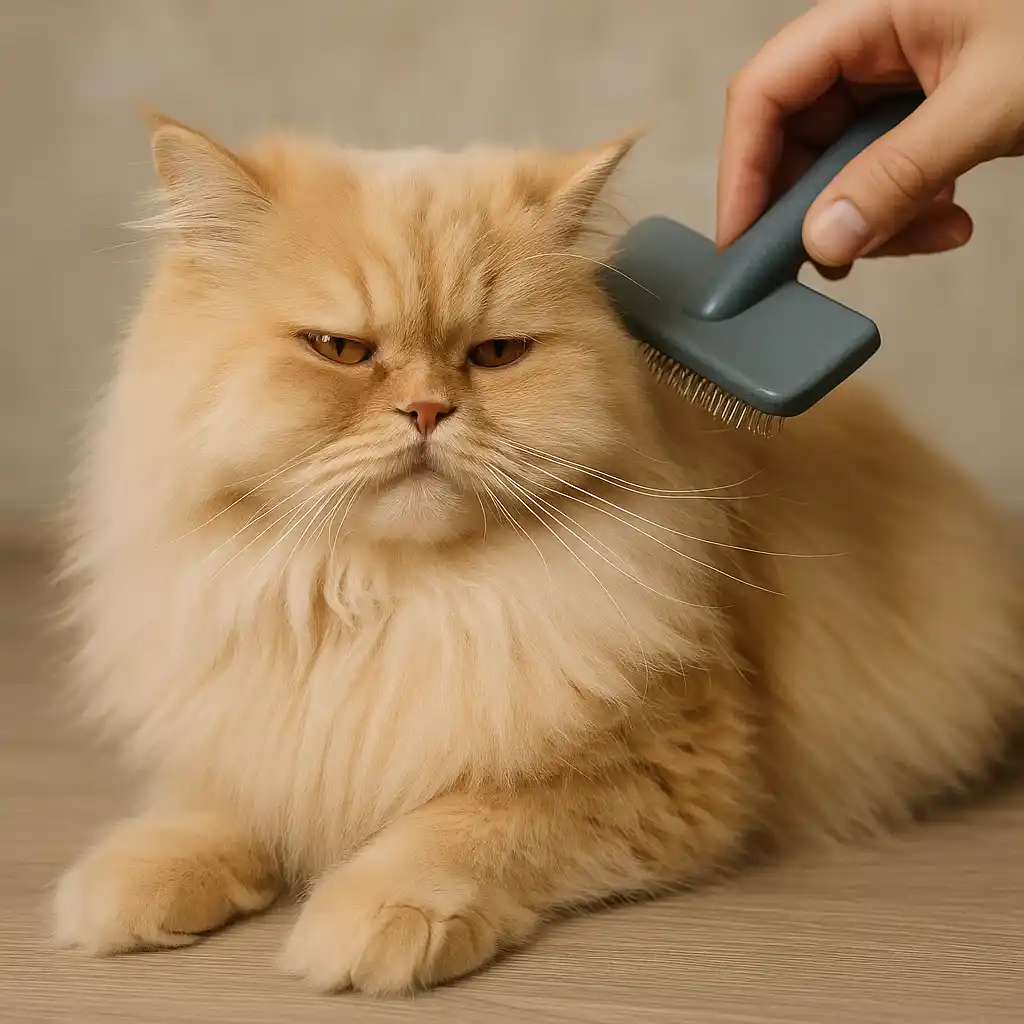
One of the most important Persian cat grooming tips is daily brushing. It prevents knots, reduces shedding, and keeps the coat shiny.
Tools You’ll Need:
- Wide-tooth comb – for detangling thick fur.
- Slicker brush – to remove loose hair and prevent matting.
- De-shedding tool – especially useful during heavy shedding seasons.
Brushing Routine:
- Start at the neck and move toward the tail.
- Gently separate small sections of fur.
- Pay extra attention to problem areas like the armpits, behind the ears, and under the belly.
Fact: Regular brushing can reduce shedding by up to 70%, according to the American Veterinary Medical Association (AVMA).
Bathing Your Persian Cat
Bathing helps remove excess oil, dirt, and loose hair, which reduces shedding. Persians may need a bath once every 4–6 weeks, depending on coat condition.
Bathing Tips:
- Use a cat-specific shampoo (never human products).
- Apply conditioner to help detangle long fur.
- Dry thoroughly with a towel, followed by a pet-safe blow dryer on low heat.
Bathing too often can strip natural oils, so balance is key.
Trimming and Coat Maintenance
Regular trimming keeps the coat manageable. While full shaving isn’t recommended unless necessary, professional trimming around the paws, rear, and belly can help reduce tangling and shedding.
Pro Tip: Many cat owners in the UAE opt for Pet Grooming Abu Dhabi services that offer specialized trimming for Persian cats, ensuring a stress-free experience for both pets and owners.
Eye, Ear, and Paw Care
Persian cats are prone to tear staining due to their flat facial structure. Clean the eye area daily with a damp cotton pad. Ears should be checked weekly for wax or infection.
Also, trim nails every 2–3 weeks to prevent overgrowth. Since grooming can be overwhelming, Mobile Grooming Abu Dhabi services provide at-home grooming, making it convenient for busy pet parents.
Nutrition and Hydration for Healthy Fur
Diet plays a major role in shedding. High-quality cat food rich in omega-3 and omega-6 fatty acids improves coat health and reduces hair loss.
Make sure your cat stays hydrated, as dehydration can cause dry skin and brittle fur, leading to more shedding.
Training Your Persian for Grooming Sessions
Not all cats enjoy grooming. That’s why Persian Cat Training is helpful to make grooming stress-free. Start with short, calm sessions and reward your cat with treats. Over time, they will associate grooming with positive experiences.
Patience is key—forcing grooming can make your Persian anxious, which increases stress shedding.
Professional Grooming vs. At-Home Grooming
While at-home grooming is essential, professional grooming every 2–3 months ensures deep coat care. Groomers use professional tools and techniques to remove undercoat buildup and safely trim fur.
In cities like Abu Dhabi, dedicated grooming services for Persian cats combine convenience with expertise, making them an excellent choice for busy owners.
Final Thoughts
Managing shedding in Persian cats requires consistent care, proper tools, and balanced nutrition. By following these Persian cat grooming tips, you’ll not only reduce shedding but also strengthen the bond with your cat.
Regular brushing, occasional baths, trimming, and proper diet go a long way in maintaining a healthy coat. And when needed, professional services in Abu Dhabi make grooming easier than ever.
A well-groomed Persian isn’t just about beauty—it’s about ensuring your beloved companion enjoys a comfortable, healthy, and happy life.
Frequently Asked Questions
Can matting actually hurt my Persian cat? Yes, tight mats pull on the skin every time the cat moves, and in bad cases, they can even trap moisture underneath and lead to skin infections.
Will my Persian’s fur grow back the same after shaving for mats? Not right away, it often grows back a bit patchy or a different texture for a few months before going back to normal.
Do Persian cats shed more during certain times of the year? Yes, most shed more in spring and fall as their coat adjusts to the weather, so a bit of extra brushing during those months really helps.
How do I know if shedding is normal or something more serious? Regular shedding is fine, but bald patches, lots of scratching, or flaky skin alongside it usually means it’s worth a vet visit.
Can stress make a Persian cat shed more? Yes, stressed cats often shed more, which is also why forcing a grooming session can backfire and make shedding worse instead of better.