
You know the feeling. You book the appointment, pay for the full package, and your dog comes home smelling like a clean towel. The coat is soft. The ears look spotless. For about forty-eight hours, your living room smells like a home that does not contain a dog.
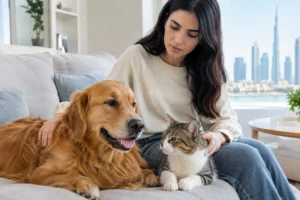
Then Thursday evening arrives in Abu Dhabi. Your dog settles against your leg on the sofa, you lean down, and there it is again. That faintly sour, slightly musty smell you thought you had just paid to get rid of.
The first instinct is usually to blame the groomer. Sometimes that is fair. More often, the smell was never fully gone in the first place, or something in your dog’s body or your home is putting it straight back.
This is one of the more common questions we hear about dog grooming in Abu Dhabi, and the honest answer is that odour returning in two days is almost always a signal rather than a failure. Here is what that signal usually means.
Clean Coat, Same Source
A bath removes what is sitting on the hair. It does not change what is producing the smell underneath.
If the odour is coming from inflamed skin, an infected ear canal, a sore tooth or a bed that has not been washed in two months, shampoo buys you a day or two of cover. The source keeps working the whole time.
So the useful question is not whether the groom was thorough. It is where the smell is actually coming from. Get close to your dog and sniff in a few specific places: the ears, the mouth, the paws, the base of the tail, and any skin folds. Dogs rarely smell evenly all over. Finding the hot spot tells you most of what you need to know.
Damp Fur That Never Fully Dried
This is the single most common cause, and it is also the easiest to miss.
A dog can feel completely dry on the surface while the undercoat near the skin is still holding moisture. Thick-coated breeds, spaniels with heavy ear feathering, and anything with a dense double coat are the usual candidates. Trapped moisture against warm skin is exactly the environment yeast and bacteria like, and the smell they produce is that damp-laundry note most owners recognise straight away.
Abu Dhabi makes this worse rather than better. People assume the heat dries a dog quickly, but coastal humidity slows evaporation, and an air-conditioned flat keeps a dog cool enough that a damp undercoat can sit wet for hours.
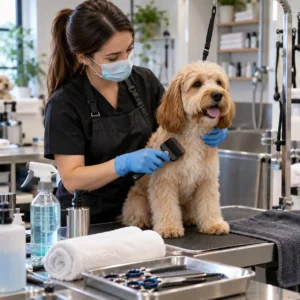
If the smell appears a day or two after every wash and fades slightly in between, drying is the first thing to look at. Towel drying alone will not reach the undercoat. Proper blow-drying to the skin, section by section, is what prevents it, and it is one of the clearest differences between a quick wash and professional dog grooming. If you have ever wondered, “Why Does My Dog Still Smell After a Bath?”, trapped moisture in the undercoat could be one of the reasons. In Abu Dhabi’s humid conditions, proper drying is essential to keep your dog’s coat fresh and comfortable.
Skin That Is Not Healthy Underneath
When skin is irritated, it overproduces oil, and the yeast and bacteria that live on every dog’s skin multiply in it. That overgrowth has a distinct smell, often described as musty, cheesy or like corn chips.
Allergies are a frequent trigger. So are skin folds on breeds like Pugs, French Bulldogs and Shar Peis, where warmth and moisture collect in the creases. Pressure points, armpits and the area around the tail base are other common spots.
The giveaway is that the smell comes back fast and is usually joined by something you can see. Look for redness, flaking, a greasy feel to the coat, thinning hair, or a dog that licks and scratches one area repeatedly.
Grooming helps manage this. It does not treat it. If the skin itself looks unhappy, the shampoo your dog needs may be a medicated one prescribed by a vet, not an off-the-shelf product.
Ears: The Smell People Mistake For Body Odour
An ear infection can make a whole dog smell, because the odour travels on the head and gets rubbed into furniture and bedding every time the dog shakes or scratches.
Floppy-eared breeds are most at risk, since the ear canal stays warm and poorly ventilated. Dogs who swim, or who get water in the ears during a bath, are also prone to it.
Lift the ear flap and smell inside. A healthy ear smells of almost nothing. A sharp, yeasty or sweet-sour smell, dark waxy discharge, redness inside the canal, head shaking or a dog that flinches when you touch the ear all point to an infection.
This is a veterinary matter, not a grooming one. Over-the-counter ear cleaners can make things worse if the eardrum is damaged, so get it looked at before you put anything in.
Teeth and Gums
Dental disease is common in adult dogs and badly under-diagnosed, particularly in small breeds. The smell it produces is strong, and because dogs groom themselves, lick their coat and breathe near you constantly, it spreads well beyond the mouth.
If your dog smells worst around the head and face, or if the odour hits you when they yawn or pant, check the mouth. Lift the lip and look at the back teeth, where tartar builds first. Brown or yellow build-up along the gum line, red or swollen gums, dropped food, chewing on one side or reluctance to let you touch the muzzle are all worth a vet visit.
A groomer can brush teeth as part of a package and keep surface build-up down. Established tartar and gum disease need a professional dental cleaning under veterinary care.
A Clean Dog Lying On A Dirty Bed
This one is easy to overlook because the dog is the thing you just cleaned.
A dog bed absorbs oil, saliva and skin cells for weeks at a time. Collars and harnesses hold moisture against the neck. Car seat covers, a favourite rug, the corner of the sofa your dog has claimed: all of them carry the old smell and transfer it straight back within hours.
If your dog smells fine in the morning and sour by evening, look at where they sleep. Washing the bed cover, the blanket and the collar on the same day as the groom makes a bigger difference than most owners expect, and it costs nothing.
What To Do This Week
Before booking another bath, work through these. Most owners find the answer in the first three.
- Find the source. Smell the ears, mouth, paws, tail base and any skin folds separately. Note which one is strongest.
- Wash everything the dog sleeps on. Bed cover, blankets, collar, harness, car cover. Hot wash, fully dried.
- Dry properly after any wash. Towel, then blow-dry on a cool or low setting while brushing the coat open so air reaches the skin. Pay attention to the chest, armpits, behind the ears and under the tail.
- Brush between grooms. Matted hair traps moisture and dirt against the skin and is a reliable source of odour.
- Rinse and dry after the beach or pool. Salt and chlorine left in the coat irritate skin and smell within a day.
- Resist bathing more often. Washing a dog weekly strips natural oils, which usually makes skin problems and odour worse rather than better.
What to avoid: perfumes and deodorising sprays on an unidentified smell, human shampoo, and cotton buds pushed into the ear canal.
When It Is Time To See A Vet
Grooming cannot fix a medical problem, and a persistent smell is often the earliest sign of one. Book a veterinary appointment if you notice any of the following.
- The smell returns within days of every groom, no matter how carefully the coat is dried
- Itching, scratching or licking that focuses on one area
- Red, inflamed, flaking, crusting or greasy skin
- Discharge from the ears, eyes or anywhere else
- Head shaking, head tilting or sensitivity when you touch the ears
- Bad breath, visible tartar, bleeding gums or trouble eating
- Scooting along the floor or a sudden sharp fishy smell, which can indicate anal gland problems
- Hair loss, lumps, open sores, or a smell that changes suddenly
- Any odour alongside lethargy, appetite changes, weight loss or increased thirst
A vet can take a sample from the skin or ear and identify exactly which organism is involved. That matters, because yeast and bacterial infections are treated differently, and guessing wrong wastes weeks. Once the underlying issue is treated, regular grooming keeps it from coming back.
This article is general information and does not replace an examination by a licensed veterinarian.
Where A Thorough Groom Makes The Difference
Most of what keeps odour away is unglamorous: drying the undercoat properly rather than quickly, brushing out mats instead of working around them, cleaning the outer ear without pushing debris inward, and telling you honestly when something looks like a vet’s job rather than a groomer’s.
That last part matters. A groomer sees your dog’s skin, ears and teeth more closely than anyone except your vet, and is often the first to spot a change.
At Mr Pets, our packages cover bathing, blow-drying, brushing, ear and eye cleaning, teeth cleaning and nail clipping for dogs of every size, in the salon or at your door through our mobile service. If you would rather not transport a nervous dog across the city, mobile pet grooming in Abu Dhabi brings the same process to your home, and our pet taxi can handle the trip to a vet appointment if one turns out to be needed.
Frequently Asked Questions
How soon after a groom should my dog stop smelling clean?
A fresh scent fading after a few days is normal. A genuine odour returning within two days is not, and usually points to drying, skin, ears, teeth or bedding.
Will bathing my dog more often fix the smell?
Usually the opposite. Frequent washing strips the oils that protect the skin barrier, which can worsen irritation and odour. Most dogs do well with a groom every four to eight weeks, adjusted for coat type.
My dog smells only after walks. Why?
Damp paws, sand and sweat between the pads are common causes. Rinse and dry the feet after outings, especially after the beach, and check between the toes for redness.
Can a groomer tell me if my dog has an infection?
A groomer can flag what looks abnormal and recommend you see a vet, but diagnosis and treatment are a veterinarian’s job.
Does a smelly dog mean poor hygiene at home?
Not usually. Plenty of well-cared-for dogs develop odour from allergies, ear problems or dental disease. The smell is information, not a verdict on the owner.
Is it safe to use deodorising sprays between grooms?
They mask rather than treat, and some irritate sensitive skin. Find the cause first; if you do use one, choose a product made for dogs and avoid applying it to broken or inflamed skin.