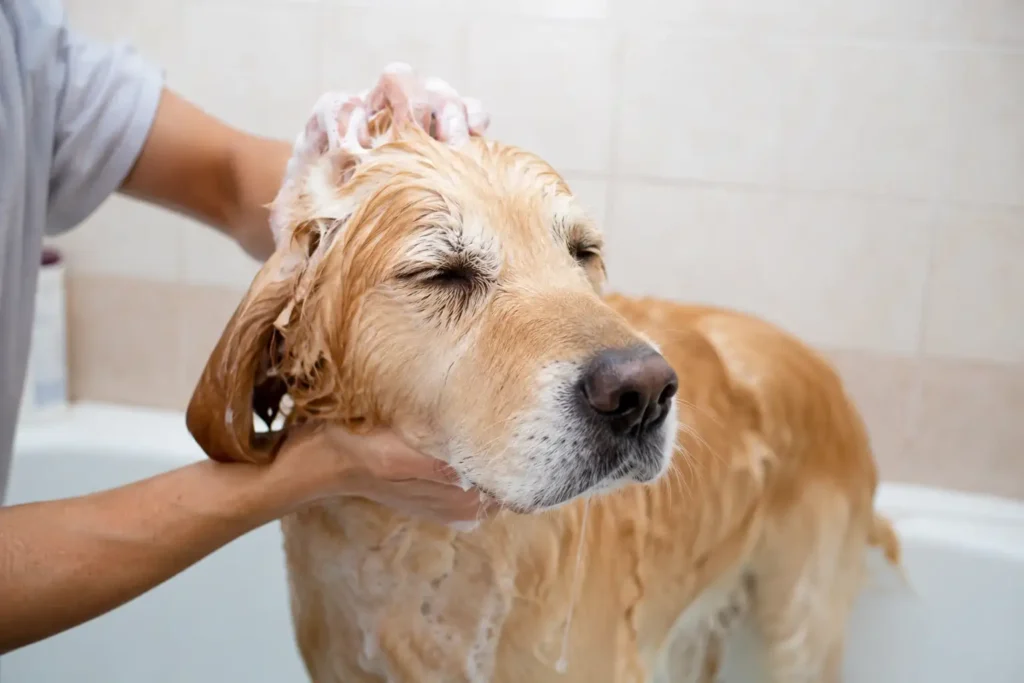

If your dog still smells after a bath, the cause may be trapped moisture, dirty ears, dental issues, skin folds, an improperly dried coat, or buildup that regular bathing doesn’t fully remove. Identifying where the smell is coming from is more important than simply bathing your dog again.
A client once told our grooming team, “I gave him a proper bath yesterday in Abu Dhabi, so why does he already smell like he needs another one?”
When we checked her dog, the problem wasn’t the shampoo. The coat looked clean on the surface, but moisture and trapped debris had built up close to the skin, particularly around the ears, paws, and under the collar area.
This is something we see more often than pet owners expect during dog grooming in Abu Dhabi. A bath can make a dog’s coat smell fresh temporarily, but if the actual source of the odour is hiding beneath the fur, washing alone may not solve it.
The First Thing We Check Is Where the Smell Is Coming From
One mistake pet owners often make is assuming the entire dog smells bad.
During grooming, we usually notice that the odour is stronger in one particular area. It could be around the ears, mouth, paws, rear area, or underneath a thick coat.
That changes the solution completely.
For example, bathing a dog again won’t do much if the smell is actually coming from inside the ears or from moisture trapped deep in the undercoat.
1. The Coat Wasn’t Completely Dried
This is one of the most common reasons a dog develops that familiar “wet dog” smell shortly after a bath.
Thick-coated breeds can feel dry on the outside while the fur close to their skin remains damp. In humid conditions, that trapped moisture can quickly cause an unpleasant smell.
I have seen owners towel-dry their dogs thoroughly and assume the job is finished. But with dense coats, especially double-coated breeds, proper drying takes much longer than expected.
What helps?
- Dry the undercoat, not just the top layer
- Pay attention to the belly and legs
- Check areas underneath collars
- Avoid leaving thick fur damp for extended periods
2. Dirty Ears Can Make a Freshly Bathed Dog Smell Bad
Sometimes the dog’s coat smells perfectly clean, but the odour returns because the ears were never the problem’s focus.
Ear odours can be surprisingly strong and may become noticeable immediately after a bath.
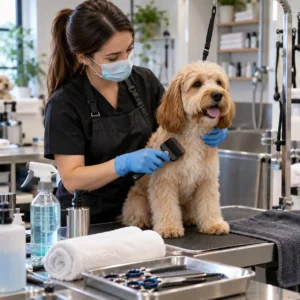
This is why a proper grooming session involves more than shampooing the coat. Groomers assess different areas of the dog rather than treating every bad smell as a bathing problem.
3. Your Dog’s Paws May Be Holding the Odour
Dogs spend their entire day walking across floors, gardens, pavements, and outdoor surfaces.
The spaces between their paw pads can collect dirt and moisture, particularly in dogs with longer fur around their feet.
A quick bath may rinse the paws without properly cleaning between the pads.
4. The Smell Could Be Coming From the Mouth
If your dog smells clean everywhere except around the face, bathing isn’t likely to fix the issue.
Dental hygiene can significantly affect a dog’s overall smell. Food particles and oral bacteria can create an odour that owners sometimes mistake for a “dirty dog” smell.
This is why it’s worth checking where the smell becomes strongest before deciding your dog simply needs another bath.
5. Thick or Matted Fur Can Trap Dirt and Moisture
Matted fur creates small pockets where moisture, dirt, and natural oils can become trapped.
From the outside, the coat may look manageable. But once you separate the fur during grooming, you can sometimes find buildup close to the skin.
Regular brushing helps, but dogs with dense or long coats may need professional grooming to properly clean and maintain the entire coat.
A Bath Is Not Always the Same as Proper Grooming
This is one of those 10 facts about dog grooming most pet owners never realise, and it’s the difference that actually matters:
| A Basic Bath | A Full Grooming Session |
|---|---|
| Cleans the visible coat | Cleans and assesses the entire coat |
| Focuses mainly on shampooing | Includes brushing and coat maintenance |
| May leave trapped undercoat | Helps remove loose fur and buildup |
| Quick surface drying | More thorough drying |
| Temporary freshness | Addresses hygiene-related problem areas |
A dog that keeps smelling after baths may not necessarily need more baths. They may need better coat maintenance.
When Should You Be Concerned?
A persistent or unusually strong smell shouldn’t always be treated as a grooming issue.
If the smell is coming from one specific area, returns immediately after bathing, or is accompanied by changes in the skin, ears, or behaviour, it’s worth getting professional advice.
From our experience, repeatedly covering a smell with stronger shampoo is rarely the best solution. Finding the source is.
Final Thoughts
If your dog still smells after a bath, don’t immediately assume you used the wrong shampoo.
Check whether the coat was properly dried and pay attention to the ears, paws, mouth, skin folds, and areas where dense fur can trap moisture.
At Mr Pets, we often find that the answer isn’t “bathe the dog more often.” It’s understanding what is causing the smell in the first place.
A proper grooming routine focuses on the whole dog, not just making the coat smell nice for a few hours.
Frequently Asked Questions
Why does my dog smell again one day after a bath?
The coat may not have dried completely, or the smell could be coming from the ears, mouth, paws, or trapped moisture beneath thick fur.
Can wet fur cause a bad smell in dogs?
Yes. Moisture trapped close to the skin, especially in thick coats, can cause a noticeable unpleasant odour.
How often should I bathe my dog if they smell bad?
Avoid bathing your dog repeatedly without identifying the cause. Frequent bathing may not solve the underlying issue and can affect the coat and skin.
Does professional grooming help with dog odour?
Yes. A thorough grooming session can clean areas that may be missed during a regular home bath and help identify where persistent odours are coming from.