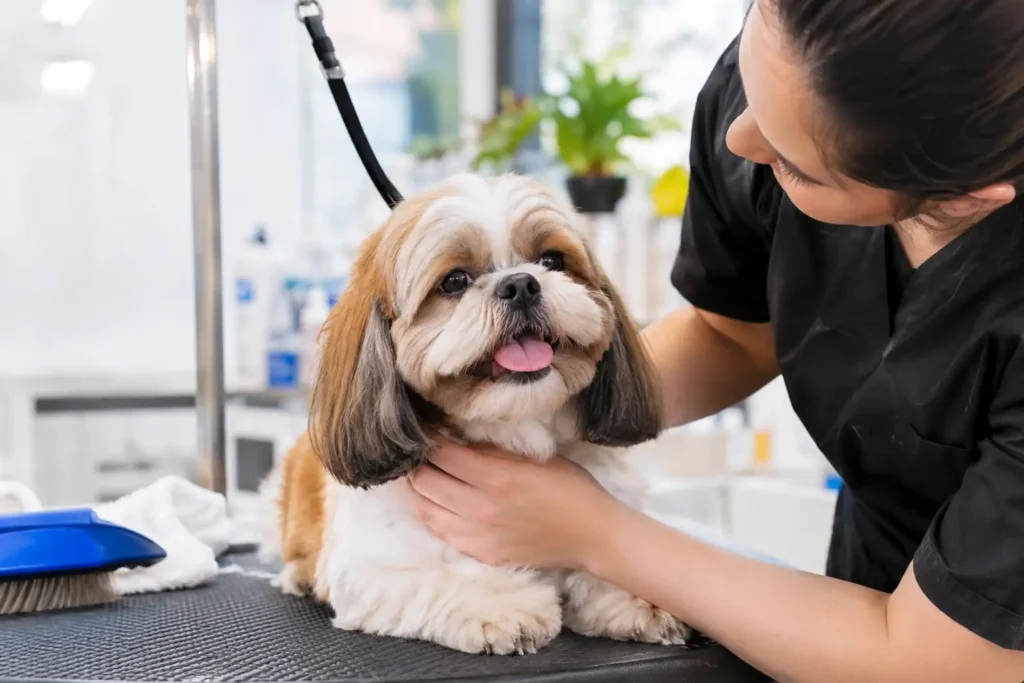

Reduce pet anxiety by introducing grooming tools gradually, using treats and gentle handling, taking regular breaks, and stopping when your pet shows signs of stress.
Most pets can learn to cope with grooming, and some even relax, but it rarely happens by accident. Calm sessions usually come from small practice steps at home, a groomer who reads body language, and the freedom to stop when the pet has had enough. Here’s how to spot stress, prepare, and know when to pause.
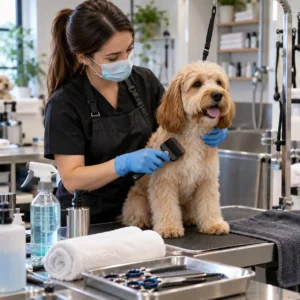
One dog owner struggled with grooming appointments because their dog would tremble, hide, and pull away whenever the groomer touched his paws. After a stressful first visit, the groomer suggested taking things slowly. At the next appointment, the dog was given time to sniff the tools and received treats during gentle brushing. His owner continued short practice sessions at home. Over time, grooming became less frightening, and the dog began tolerating the process more calmly.
Why Pets Get Anxious About Grooming
Grooming asks a lot at once: handling of sensitive areas, standing still, loud dryers, buzzing clippers, slippery tables and unfamiliar smells. A dog that tenses when nail clippers appear, or a cat that vanishes when the carrier comes out, is often reacting to something it has learned to expect. Painful mats, sore joints, limited early handling and past rough experiences can all add to it.
Signs of Fear and Stress
In Dogs
Early signs are subtle: lip licking, yawning, panting when not hot, trembling, a tucked tail, turning away, or showing the whites of the eyes. Some dogs freeze, which is easy to mistake for good behaviour.
In Cats
Cats may flatten their ears, widen their pupils, lash their tails, crouch low, hiss or hide. Sudden stillness can also signal fear.
How to Prepare Your Pet for Grooming at Home in Abu Dhabi
Short, rewarded practice beats one long session. Touch a paw for a second, then give a treat. Let your pet sniff the brush, then take one stroke. Show the clippers without using them. Run a hairdryer in another room before moving it closer. For baths, start with a damp towel on the paws before introducing water. Stop each step while your pet still looks relaxed, because ending on a calm note teaches that the tool is nothing to fear.
A walk or play session beforehand often helps, and the groomer can advise on feeding before the visit. When choosing a suitable service for pet grooming in Abu Dhabi, ask how nervous animals are handled, whether breaks are built in, and whether a short introductory visit is possible. Share any past bad experiences, sensitive spots and medical issues so nothing comes as a surprise.
Reducing Anxiety in Dogs and Cats in Abu Dhabi
Dogs
Dog anxiety usually eases through gradual desensitisation paired with rewards. If your dog is new to dog grooming in Abu Dhabi, a brief first visit with only a sniff, a treat and a quick brush can build a positive association. Calm handling, a patient pace and breaks between noisy tasks matter more than speed. Scolding a fearful dog only adds to the fear.
Cats
Cats rely on retreat, so hiding is a coping strategy, not stubbornness. Leave the carrier out at home with a blanket and treats inside so it stops predicting a trip. cat grooming in Abu Dhabi suits cats best when handling is gentle and minimal, the room is quiet, and sessions are short. Never chase a cat or hold it down hard; if it cannot settle, stop.
Is Mobile Grooming Worth Considering?
Mobile Pet Grooming in Abu Dhabi may help some anxious pets by avoiding the car journey and the noise and smells of a busy salon. Results depend on the individual, though. Some pets are unsettled by a stranger arriving or by the grooming van itself, so mobile grooming is not automatically stress-free. Watch your pet’s reaction and adjust.
When to Pause the Session
Pause if your pet shows severe distress, aggression, flinching or crying when touched, open-mouth or laboured breathing, or collapse. These can mean fear has become too much, or that something hurts. Do not push on. Speak to your vet, who can check for pain or medical causes and advise on behavioural support. Never give sedatives unless a vet has prescribed them.
FAQs About Pet Anxiety During Grooming
1. How can I calm my pet before grooming?
Introduce grooming tools gradually, offer treats, and practise gentle brushing at home.
2. Why does my dog get scared during grooming?
Loud noises, unfamiliar tools, sensitive areas, or past negative experiences can trigger fear.
3. How can I reduce my cat’s grooming anxiety?
Use gentle handling, keep sessions short, and provide a quiet environment without forcing interaction.
4. Is mobile pet grooming better for anxious pets?
It can help by avoiding travel and busy salons, but some pets may still feel anxious around unfamiliar groomers.
5. When should I stop a grooming session?
Stop if your pet shows severe distress, struggles intensely, cries in pain, or has difficulty breathing. Consult a veterinarian when needed.
Conclusion
Reducing pet anxiety during grooming takes patience, gentle handling, and positive reinforcement. Start with short practice sessions at home, watch your pet’s body language, and choose a groomer who respects their comfort. Never force a frightened pet to continue. If anxiety persists or your pet shows signs of pain, consult a veterinarian for guidance.