






The most common dog bad breath causes are plaque buildup, tartar accumulation, gum disease, infected teeth, and bacteria trapped inside the mouth. However, persistent bad breath can sometimes indicate more serious health problems, including kidney disease, diabetes, or oral infections.
A dog’s breath may smell unpleasant after eating certain foods, but a strong, rotten, or unusually sweet odor should never be ignored. Persistent bad breath is often an early warning sign of dental disease, even when your dog appears healthy, playful, and comfortable.
According to VCA Animal Hospitals, periodontal disease is the leading cause of halitosis (bad breath) in dogs. Understanding the underlying cause is the first step toward choosing safe, effective treatment.
1. Poor Dental Hygiene and Plaque Buildup
Imagine your dog greeting you every morning with an enthusiastic lick. One day, you notice that familiar greeting comes with an unusually unpleasant smell.
You check your dog’s mouth and notice yellowish deposits around the teeth. This could be plaque that has hardened into tartar.
Plaque contains bacteria that accumulate on tooth surfaces. Without regular cleaning, it can lead to gum inflammation, periodontal disease, and persistent bad breath.
Common warning signs include:
- Yellow or brown deposits on teeth
- Red, swollen, or bleeding gums
- Difficulty chewing hard food
- Excessive drooling
- Persistent unpleasant mouth odor
Daily brushing with dog-safe toothpaste is one of the most effective ways to reduce plaque.
2. Gum Disease and Infected Teeth
Sometimes, when a dog has bad breath, the real problem is hidden beneath the gumline.
Periodontal disease damages the tissues supporting the teeth. As the condition progresses, dogs may develop painful infections, loose teeth, and difficulty eating. Dogs are often remarkably good at hiding dental discomfort. They may continue eating normally despite significant oral disease.
Watch for unusual chewing habits, dropping food, pawing at the mouth, or avoiding chew toys.
A veterinary dental examination is necessary to determine whether professional cleaning, dental X-rays, or tooth extraction is required.
3. Food Habits and Things Dogs Shouldn’t Eat
Dogs explore their surroundings with their noses and mouths, sometimes consuming things their owners would rather not imagine. Eating garbage, spoiled food, feces, or decomposing material can temporarily produce particularly unpleasant breath.
Food particles trapped between teeth can also contribute to bacterial growth.
However, an important distinction exists: food-related odor may disappear, while breath caused by dental disease often persists.
If your dog’s breath remains unpleasant despite improved oral hygiene, arrange a veterinary examination rather than assuming their diet is responsible.
4. Underlying Medical Conditions
Not every case of bad breath begins inside the mouth.
Certain medical conditions can produce distinctive breath odors, although smell alone cannot confirm a diagnosis.
| Breath odor or symptom | Possible concern |
|---|---|
| Rotten or foul smell | Dental infection or periodontal disease |
| Sweet or fruity breath | Possible diabetic ketoacidosis |
| Ammonia-like or urine-like odor | Possible kidney dysfunction |
| Bad breath with vomiting | Oral or gastrointestinal disease |
| Bad breath with oral bleeding | Injury, severe dental disease, or an oral growth |
Diabetic ketoacidosis is a medical emergency. Fruity breath accompanied by vomiting, weakness, or abnormal breathing requires immediate veterinary attention.
Persistent unusual odors, particularly alongside appetite changes, increased thirst, weight loss, or lethargy, warrant veterinary investigation.
5. Can Grooming Help You Notice Bad Breath Earlier?
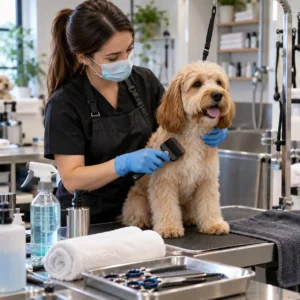
Consider a realistic situation at a grooming salon in Abu Dhabi.
A cheerful little dog arrives for a regular appointment. His coat looks healthy, his tail keeps wagging, and nothing initially appears unusual. But when he lifts his head toward the groomer, a strong smell comes from his mouth.
During dog grooming in Abu Dhabi, noticing an unusual odor can give the groomer an opportunity to alert the owner.
The dog might need dental care rather than another grooming product.
Professional pet grooming services in Abu Dhabi supports overall hygiene and provides opportunities to notice visible changes around the mouth, skin, ears, and coat.
However, groomers cannot diagnose dental disease or replace veterinary dental examinations. Persistent bad breath should always be assessed by a veterinarian.
6. Can Dog Breath Fresheners Help Reduce Bad Breath?
A dog breath freshener can temporarily improve mouth odor, but whether it provides meaningful dental benefits depends on its ingredients, formulation, and supporting evidence.
Some dog breath mints are simply flavored treats, while certain dental chews are designed to help control plaque.
Similarly, a dog breath spray may reduce odor or help manage plaque if it has been tested for that purpose.
When choosing a product, consider:
- Products specifically formulated for dogs
- Appropriate chew sizes to reduce choking risks
- Evidence of plaque or tartar control
- Veterinary recommendations for dogs with dental problems
The Veterinary Oral Health Council (VOHC) maintains a list of products that meet its standards for plaque or tartar control. Avoid human mouthwash, toothpaste, breath mints, and products containing unsafe ingredients such as xylitol.
Most importantly, a breath freshener cannot remove infected teeth or reverse advanced periodontal disease.
7. How to Fix Bad Dog Breath Safely at Home
If you’re wondering how to fix bad dog breath, focus on identifying the cause rather than simply covering up the smell.
A safe dog bad breath remedy starts with consistent dental hygiene.
- Brush regularly: Ideally, brush your dog’s teeth daily using dog-specific toothpaste.
- Choose appropriate dental chews: Look for veterinary-recommended products with evidence of plaque control.
- Provide fresh drinking water: Clean water bowls regularly to maintain hygiene.
- Monitor eating habits: Prevent access to garbage, feces, and spoiled food.
- Schedule veterinary dental checks: Seek professional care for persistent odor, inflamed gums, or visible tartar.
Never scrape hardened tartar from your dog’s teeth at home or use baking soda, essential oils, or human dental products as treatment.
8. When Bad Breath Becomes a Serious Warning Sign
Bad breath alone is usually not an emergency, but accompanying symptoms can change the situation. If your dog is breathing heavy after exercise or exposure to Abu Dhabi’s summer heat, they may simply be cooling themselves. However, excessive panting that does not settle can indicate overheating or illness.
Dog breathing heavy is not the same as having bad breath. Heavy breathing describes a change in breathing rate or effort, while bad breath describes an unpleasant oral odor. If you notice dog trouble breathing, particularly with blue or pale gums, collapse, unusual breathing effort, or severe weakness, seek emergency veterinary care immediately.
Heatstroke is another emergency, especially during the UAE’s hotter months.
Frequently Asked Questions
Why does my dog’s breath smell rotten?
Rotten-smelling breath commonly suggests bacterial buildup, gum disease, or infected teeth. A veterinary dental examination can identify the cause.
Can bad dog breath go away naturally?
Temporary food-related odor may disappear. However, persistent bad breath caused by tartar, gum disease, or infection usually requires targeted dental care.
Are dog breath mints safe?
Dog-specific breath mints may be suitable when used according to their instructions. Choose products appropriate for your dog’s size and health, and remember that they do not replace brushing.
How often should I brush my dog’s teeth?
Daily brushing is ideal for controlling plaque. Introduce brushing gradually and use only dog-safe toothpaste.
Can grooming services cure dog bad breath?
No. Grooming helps maintain external cleanliness and may reveal noticeable oral problems, but veterinary treatment is necessary for dental infections and periodontal disease.
Final Thoughts
Understanding dog bad breath causes can help you identify dental problems before they become painful or expensive to treat.
Regular toothbrushing, appropriate dental products, healthy routines, and veterinary examinations all contribute to better oral health.
The goal isn’t simply fresher breath. It’s a healthier, more comfortable dog. When an unpleasant smell persists, investigating the cause is far more valuable than covering it up.