
Most infections shared between pets and people are bacterial, parasitic or fungal — ringworm, Salmonella and cat-scratch disease, for example. Viruses make up a smaller group, and several on this list are rare or linked to animals most families never keep. The viruses below are ordered roughly by how relevant they are to everyday pet owners in Abu Dhabi, with an honest note on risk for each.
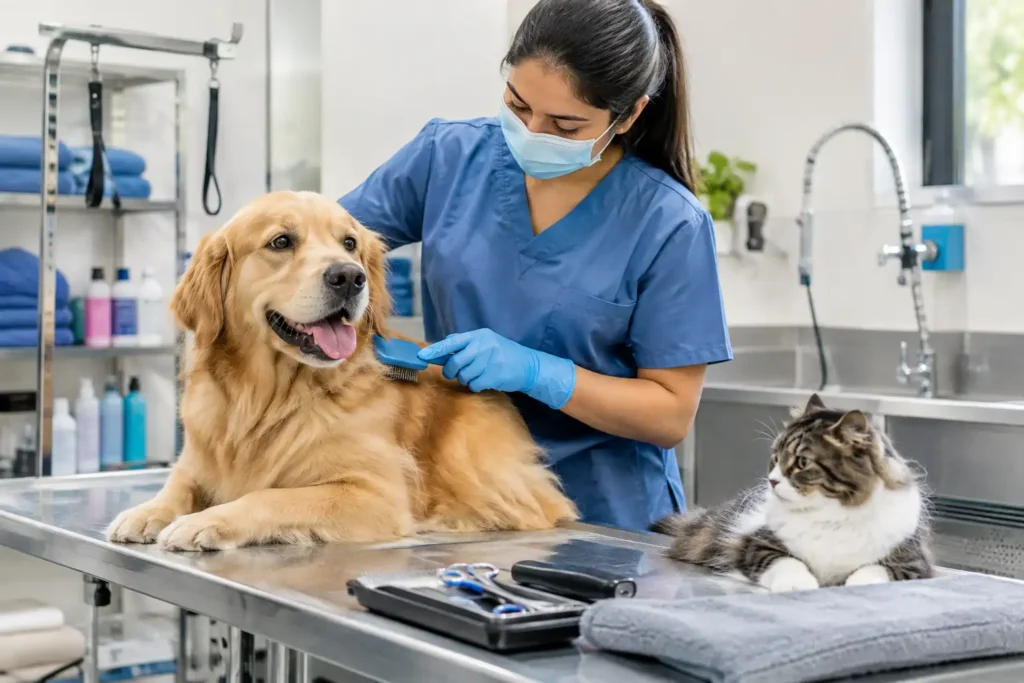
If you have ever held a wet, wriggling dog in a grooming tub or trimmed the claws of a cat who had other plans, you know grooming is close work. Hands, faces, fur, saliva and sharp tools all meet in a small space, which is why hygiene matters so much in professional pet grooming in Abu Dhabi. For most pets on most days, that closeness carries no real health risk. It is still worth knowing which infections can move between animals and people, and which ones don’t.
1. Rabies
Rabies is the one virus on this list that every pet owner and groomer should take seriously. It is carried by dogs, cats, foxes and bats, and it spreads through saliva: a bite, a scratch contaminated with saliva, or saliva reaching broken skin, eyes or mouth. Once symptoms begin it is almost always fatal. It is also almost entirely preventable. Pet vaccination is required in the UAE, and prompt post-exposure treatment protects people who are bitten.
Grooming is where bites happen. A stressed dog having its face trimmed or a cat having its paws handled can snap without warning. That is why checking vaccination records before every appointment is a basic safety step.
2. Mpox
Mpox reached headlines in 2022, but its animal story began in 2003. That year, 47 people in the US were infected by pet prairie dogs that had been housed with imported African rodents. There is one documented case of a dog catching mpox from its owners. For a detailed look at the situation in the UAE, see Mpox virus in UAE, which covers pet transmission and the risks for pet owners and groomers. There is no confirmed case of a dog or cat passing mpox to a person. For groomers, the relevant situation is handling an animal with unexplained skin lesions or exotic rodents.
3. Hantavirus
Hantaviruses live in rodents and spread mainly when people breathe in dust contaminated with rodent urine or droppings. Dogs and cats do not normally pass hantavirus to people, although pet rats have been linked to outbreaks. For more on the grooming and rodent exposure angle, see Hantavirus in UAE: Can You Catch It While Grooming Pets? Rodent activity in storage or boarding areas is also an important consideration for groomers.
4. Lymphocytic Choriomeningitis Virus (LCMV)
LCMV is carried by house mice and occasionally pet hamsters. It spreads through urine, droppings, saliva and bites. Healthy adults usually have mild illness or none at all. The virus is dangerous during pregnancy and for people with weakened immunity. Anyone who handles hamsters or cleans small-animal cages should wear gloves and wash their hands afterwards, especially pregnant staff and owners.
5. Cowpox
In Abu Dhabi, groomers should be aware that despite the name, cowpox in Europe and western Asia usually reaches people through cats. Cats can catch it while hunting wild rodents and may pass it on through scratches or contact with skin lesions. A key warning sign is an outdoor cat with crusted sores on the head, neck, or paws. Any unexplained lesion should be checked by a vet before cat grooming in Abu Dhabi goes ahead.
6. Avian Influenza (H5N1)
H5N1 is a bird virus. Since 2023 it has infected cats in several countries, mostly through raw poultry, raw pet food or unpasteurised milk. There are no confirmed cases of a pet cat passing it to a person. It has little relevance to routine dog and cat grooming. The sensible rule is simple: a visibly sick cat, particularly one with breathing or neurological signs, belongs at the vet, not the grooming table.
7. SARS-CoV-2
COVID-19 usually travels from people to pets, not the other way round. Animal-to-human cases have been documented only rarely: farmed mink, pet-shop hamsters in Hong Kong in 2022, and one suspected cat case in Thailand. In grooming, the more realistic risk is a sick owner at drop-off, which good ventilation and ordinary distancing handle well.
8. Newcastle Disease Virus
Newcastle disease affects pet birds and poultry. In people it can cause mild, short-lived conjunctivitis. Staff doing wing or nail trims on pet birds should wash their hands before touching their faces.
9. What Are Zoonotic Viruses?
Zoonotic infections are infections that pass between animals and people. Most of them are bacterial, parasitic, or fungal: ringworm, Salmonella, and cat-scratch disease, for example. Zoonotic viruses make up a smaller group. They can spread through bites, scratches, saliva, skin contact, or contaminated dust and surfaces. Zoonotic viruses spread during pet grooming when close contact with an infected animal, its saliva, skin lesions, body fluids, or contaminated tools creates an opportunity for exposure. Grooming involves almost all of these at once: restraining a nervous pet, working close to its face, clipping nails, handling every inch of its coat, and sharing tools between animals. That is why groomers are often the first to notice a suspicious sore or an unvaccinated pet. Several viruses on this list are rare or linked to animals most families never keep, and they are ordered roughly by how relevant they are to everyday pet owners and pet grooming in the UAE.
10. Orf
Orf comes from sheep and goats and causes sores on the hands of people who handle them. It matters in the UAE around farms and during Eid, but it has no connection to dog or cat grooming. It is included here only for completeness.
Why Grooming Is a Moment Worth Taking Seriously
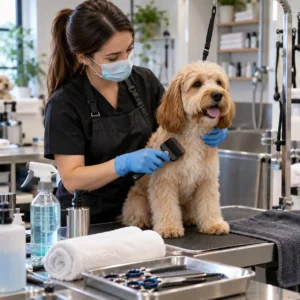
Grooming concentrates contact into a single hour. The groomer works at face level and restrains nervous animals. Sharp tools can nick skin, and bathing and high-velocity drying throw water, dander and debris into the air. Responsible pet grooming in Abu Dhabi treats each of these as a point where good habits matter, without treating every pet as a hazard.
Practical Precautions for Groomers and Owners
The most effective protections are also the simplest:
- Check rabies vaccination records before the appointment, not after a bite.
- Wear gloves when handling animals with skin lesions, small rodents or birds, and cover any cuts on your hands.
- Wash hands for at least 20 seconds between animals and before eating or touching your face.
- Clean tools and surfaces between every pet, including clippers, brushes, tables and towels.
- Reschedule visibly unwell animals and refer them to a vet.
- Care for wounds straight away. Wash a bite or scratch under running water with soap for about 15 minutes, then seek medical advice the same day.
Owners can help by telling their groomer about any sores, recent illness or bite history before the session starts. For a step-by-step look at how these risks play out during a grooming session.
The overall message is reassuring. Serious viral infections from pets are uncommon, and when they do happen, the causes are almost always an unvaccinated animal, an unusual species, or skipped basic hygiene. All three are within your control.
This article is for general information. If you have been bitten or feel unwell after contact with an animal, speak to a doctor.
Frequently Asked Questions
Which virus from pets is the most serious risk to humans?
Rabies. It spreads through the saliva of infected dogs, cats and other mammals, usually by a bite or scratch, and is almost always fatal once symptoms appear. It is also highly preventable through pet vaccination and prompt medical treatment after a bite.
Can I catch a virus from my dog or cat during grooming?
It is uncommon. Healthy, vaccinated dogs and cats rarely pass viruses to people. The main risks during grooming are bites and scratches, contact with skin lesions, and shared tools that aren’t cleaned between pets. Gloves, handwashing and checking vaccination records cover most of this.
Can pets spread Mpox to humans?
There is no confirmed case of a dog or cat passing Mpox to a person. The best-known animal outbreak, in the US in 2003, came from pet prairie dogs infected by imported African rodents. One dog in Paris caught Mpox from its owners in 2022, but that was human-to-dog spread.
Do dogs and cats carry Hantavirus?
No. Hantavirus is carried by rodents and spreads mainly through dust contaminated with rodent urine or droppings. Pet rats have caused outbreaks, but dogs and cats are not recognised spreaders, so routine dog and cat grooming is not a Hantavirus risk.
Can cats give humans bird flu (H5N1)?
Cats have been infected with H5N1 in several countries, mostly through raw poultry, raw pet food or unpasteurised milk. There are no confirmed cases of a pet cat passing it to a person. A visibly sick cat should see a vet rather than a groomer.
Which small pets carry the most virus risk?
Pet rats, which can carry Seoul hantavirus, and hamsters or mice, which can carry LCMV. LCMV is mild in most healthy adults but dangerous during pregnancy. Wear gloves when cleaning cages and wash your hands after handling these pets.
What should I do if a pet bites or scratches me during grooming?
Wash the wound under running water with soap for about 15 minutes, apply an antiseptic, and get medical advice the same day. Note the animal’s details and vaccination status, since this helps the doctor decide whether rabies treatment is needed.
How can I tell if a pet groomer in Abu Dhabi follows good hygiene?
A safety-conscious groomer asks for vaccination records before booking, cleans clippers and brushes between every pet, uses fresh towels, wears gloves when handling skin problems, and reschedules animals that look unwell. Don’t hesitate to ask about these practices before your appointment.